
For builders and site managers
Commercial & Development Hydroseeding in Denver, CO
Large-area seeding for new subdivisions, commercial pads, ponds and right-of-way restoration.
- No-charge site visits, with every estimate in writing
- Seed mixes picked for your elevation, sun and water
- Estimates that list prep, seed, mulch and slope work separately
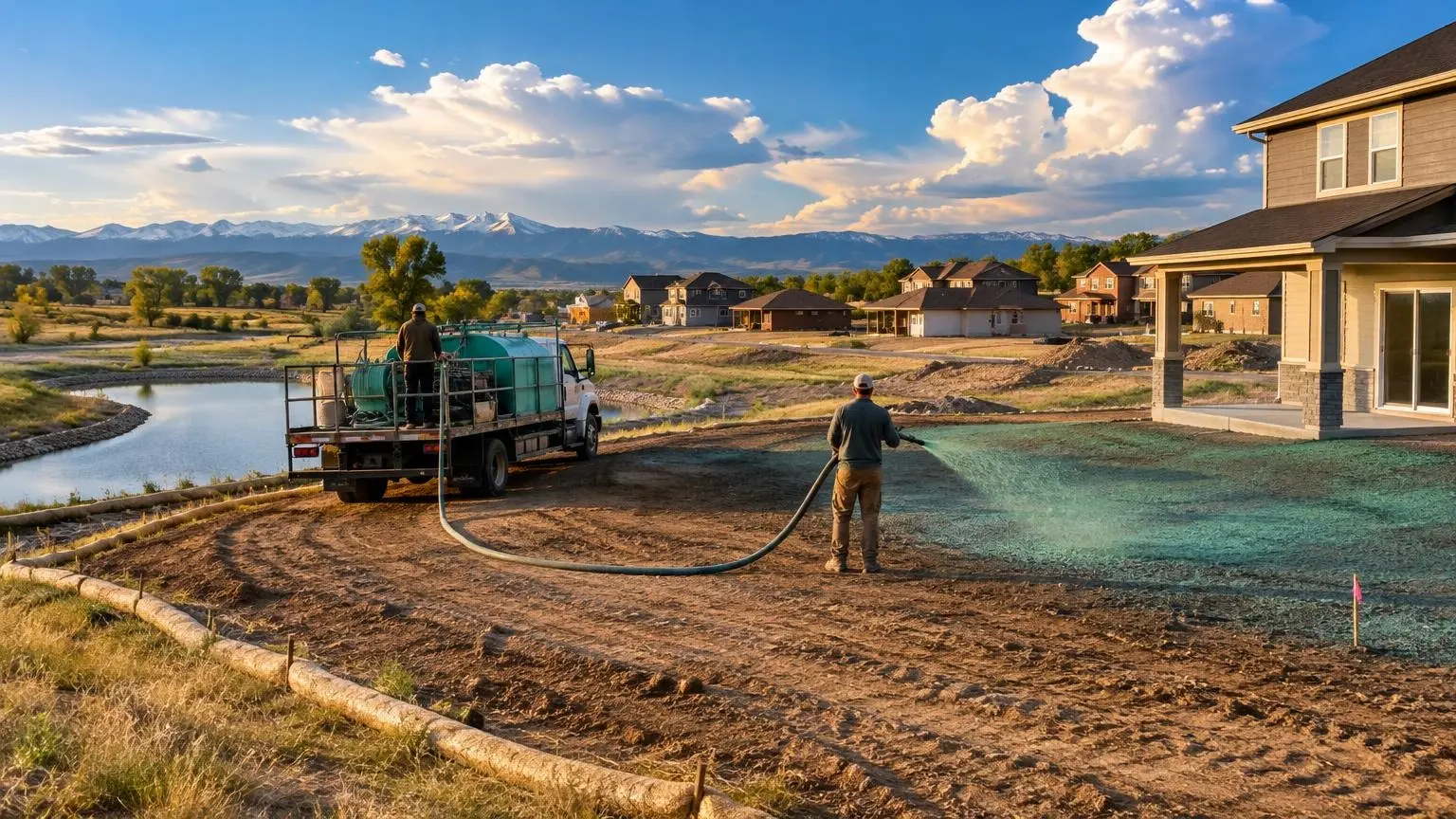
Acres of Disturbed Ground, Seeded on Schedule
Commercial and development hydroseeding in Denver covers the large, disturbed areas that every building project leaves behind: subdivision lots and common areas, commercial pads waiting for a buyer, detention and water quality ponds, utility corridors, road shoulders and the open space a project has to restore before it can close out its stormwater permit. Builders and general contractors call us when they need hydroseeding contractors who show up when the grading crew finishes and can work at the scale of acres, not square feet.
Why the stormwater permit drives the schedule
The City and County of Denver may require a Construction Activities Stormwater Discharge Permit for construction, including demolition, that disturbs one acre or more, for sites that are part of a larger development plan, and for sites with significant erosion potential. Grading changes that disturb more than half an acre also need an approved construction plan and drainage report. On those sites, bare soil is a liability until it is stabilized. We schedule seeding and mulching to follow grading closely so the site is not sitting exposed through a summer of afternoon thunderstorms.
Temporary and permanent seeding
Not every area is ready for its final cover. Stockpiles, future phases and pads waiting on a buyer often get temporary seeding and mulch to hold the soil for a season or two. Areas at final grade get the permanent mix the plans call for, which on Front Range projects is often a native dryland blend with grasses like blue grama and buffalograss, or an irrigated turf mix in landscaped common areas. We follow the seed mix and rates in your plan set or the specifications your engineer or landscape architect wrote.
Ponds, channels and rights-of-way
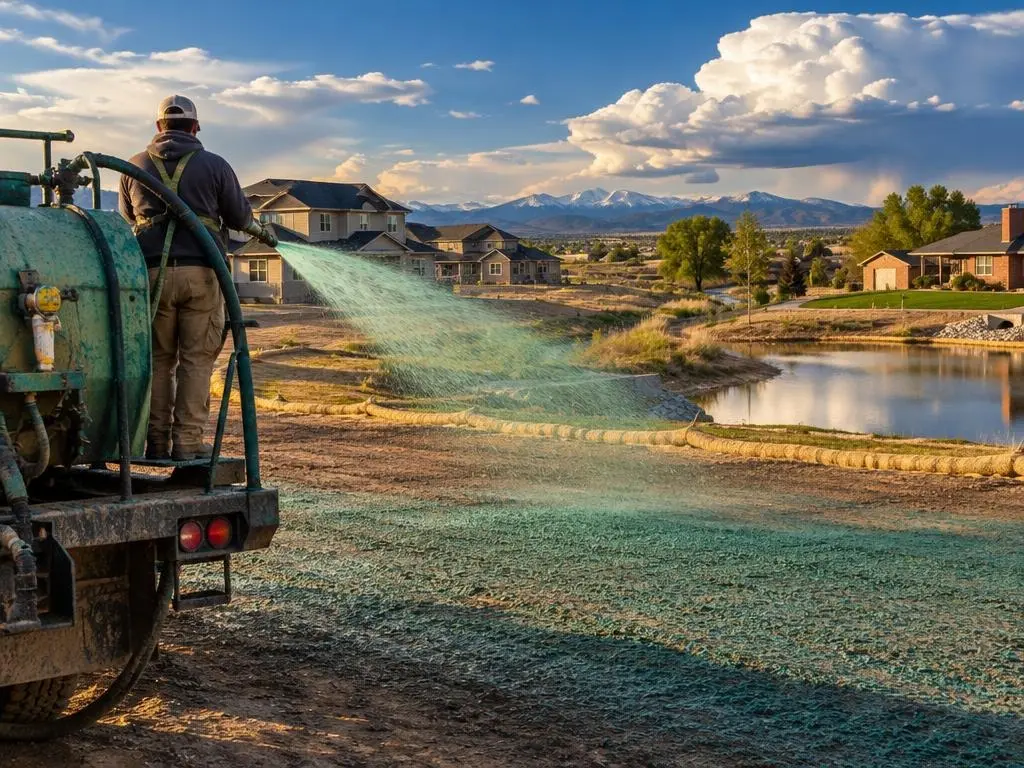
Detention ponds and drainage channels get the most water and the most erosion, so they usually need more than seed. We combine hydroseed with heavier hydromulch or erosion control blankets on side slopes and in channel bottoms, and we coordinate with whoever installs riprap and outlet structures. Along roads and utility corridors we work around traffic control and access limits.
Working with your crews
We can mobilize for a single large area or come back phase by phase as lots are finished. We keep records of what was seeded, where and when, which helps when an inspector asks or when you are documenting final stabilization. If a seeded area fails after a washout, we will come back and figure out why before we reseed. Among hydroseeding companies in the metro, that kind of follow-through is what keeps a project off the inspector's list.
Ground conditions
Much of the Front Range plains is loamy grassland soil that sheds water fast when it is compacted. The USDA notes runoff on the Ascalon series, a plains soil of large extent in eastern Colorado, ranges from low to high, and it turns alkaline with lime a foot or two down. Graded subsoil left at the surface on many sites is low in organic matter. Where specifications allow, a soil amendment or tackifier rate suited to the conditions improves the odds the seed takes.
Commercial Seeding Work
From a single pad to a multi-phase subdivision.
Subdivision lots and common areas
Final and interim seeding as phases are graded and homes go in.
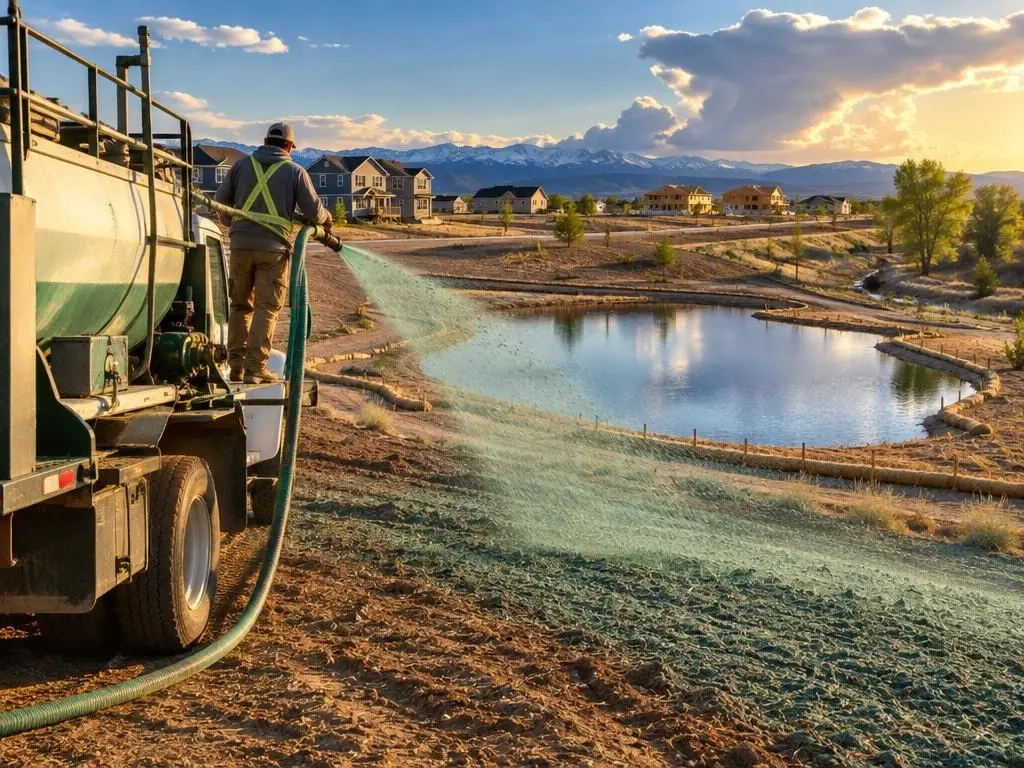
Detention and water quality ponds
Seed with hydromulch or blankets on pond slopes and bottoms.
Temporary stabilization
Seed and mulch on stockpiles, future phases and idle pads.
Native dryland mixes
Plan-specified native seed for open space and non-irrigated areas.
Right-of-way and utility restoration
Seeding along road shoulders, pipelines and trenches after the work is done.
Records for close-out
Dates, areas and mixes documented for your stormwater records.
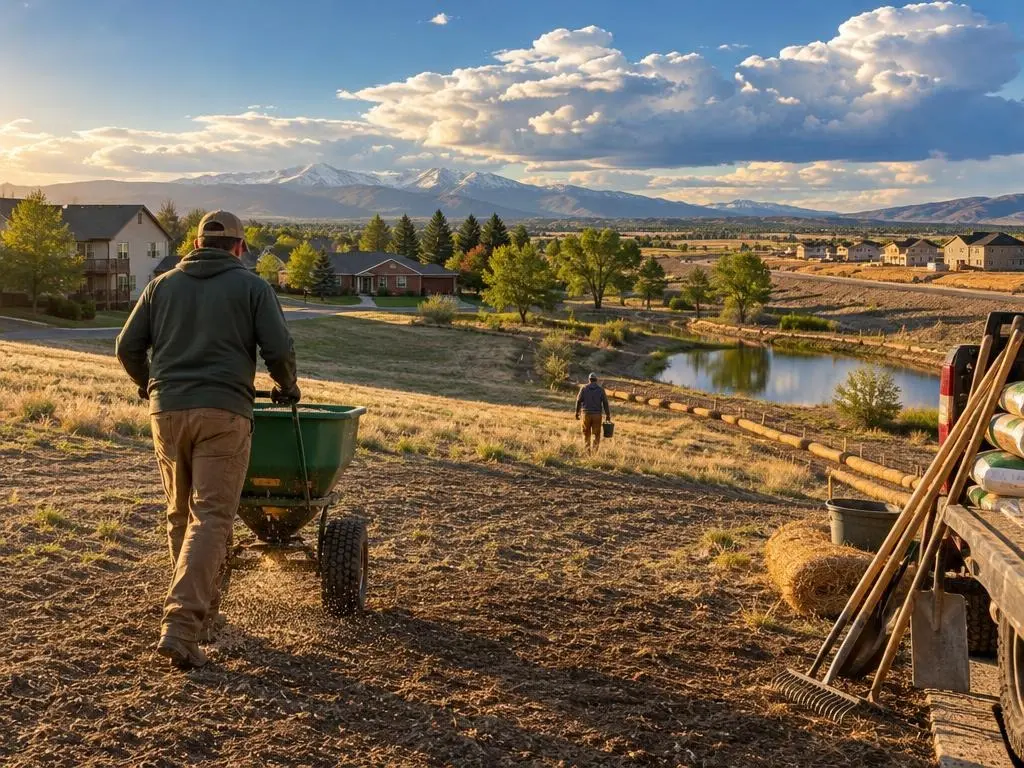
Large-Area Hydroseeding Costs
| Scope | Published range |
|---|---|
| Hydroseeding per acre (LawnStarter) | $2,136 to $4,897 |
| Hydroseeding per acre (Fixr) | $2,000 to $4,000 |
| 1 acre (HomeAdvisor) | $2,600 to $8,700 |
| 1 acre (HomeGuide) | $5,000 to $8,500 |
| City of North Little Rock (AR) bid tabulation for hydroseeding, per acre, 2023 | $2,595 to $3,325 |
| 2025 erosion unit costs from a state DOT: sprayed wood-fiber hydromulch, per 1,000 sq ft | $98 |
Published national ranges, shown for planning only. Slope, access, soil prep and seed mix change every job, and the written estimate we give you after the site visit is the price.
How Site Seeding Runs
1. Plans and specs
We review the seeding notes, mixes, rates and any stormwater plan requirements.
2. Walk the site
We check grade, access, water source and which areas are ready.
3. Schedule with grading
Seeding follows the grading crew so ground is not left bare.
4. Seed and mulch
Hydroseed, hydromulch or blankets placed as specified.
5. Document and follow up
We record what was seeded and return for washout repairs as needed.
Why Choose Us for Commercial & Development Hydroseeding
Built around your schedule
Phase-by-phase mobilization as areas reach grade.
Spec-driven
We seed the mix and rate your plans call for, not whatever is on the truck.
One crew for seed and controls
Hydroseed, blankets and silt fence from the same team.
Commercial & Development Hydroseeding Questions
Do you work for general contractors and developers?
Yes. Builders, developers, general contractors and site managers who need seeding and stabilization on a schedule make up the bulk of our commercial jobs.
Can you seed the native mix on our plans?
Yes. We follow the species, rates and mulch your plans or specifications list, and we will flag anything that looks off for the site, like buffalograss on ground above about 6,500 feet.
What does commercial hydroseeding cost per acre?
Depending on which guide you read, published figures for the seeding itself fall between roughly $2,000 and $4,900 an acre. Mulch rate, blankets, access, water and the number of mobilizations change the price, so we bid each project from the plans.
Can you seed a pond or channel?
Yes, usually with heavier mulch or an erosion control blanket on the slopes, because those areas take the most water.
Commercial & Development Hydroseeding Service Areas
- Hydroseeding in Denver, CO
- Hydroseeding in Aurora, CO
- Hydroseeding in Lakewood, CO
- Hydroseeding in Arvada, CO
- Hydroseeding in Westminster, CO
- Hydroseeding in Thornton, CO
- Hydroseeding in Centennial, CO
- Hydroseeding in Highlands Ranch, CO
- Hydroseeding in Castle Rock, CO
- Hydroseeding in Parker, CO
- Hydroseeding in Littleton, CO
- Hydroseeding in Broomfield, CO
- Hydroseeding in Commerce City, CO
- Hydroseeding in Brighton, CO
- Hydroseeding in Northglenn, CO
- Hydroseeding in Golden, CO
- Hydroseeding in Wheat Ridge, CO
- Hydroseeding in Englewood, CO
- Hydroseeding in Lone Tree, CO
- Hydroseeding in Castle Pines, CO
- Hydroseeding in Erie, CO
- Hydroseeding in Superior, CO
- Hydroseeding in Louisville, CO
- Hydroseeding in Ken Caryl, CO
Get a Commercial & Development Hydroseeding Estimate
Send us your plans and we will price the seeding and stabilization.