
Bluegrass, fescue and low-water lawns
Home Lawn Hydroseeding in Denver, CO
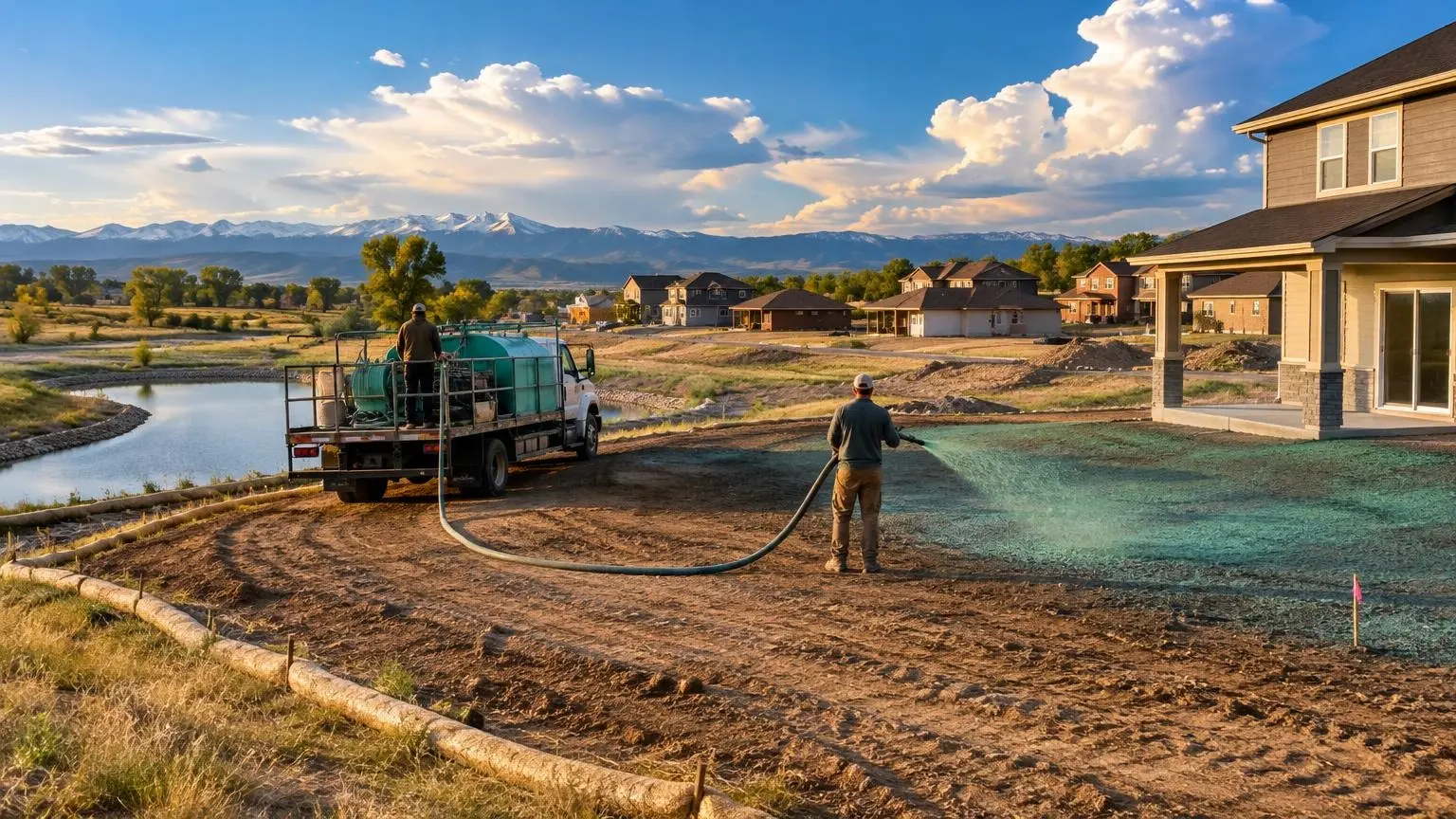
A new lawn sprayed on soil that has been graded, loosened and fed first.
- No-charge site visits, with every estimate in writing
- Seed mixes picked for your elevation, sun and water
- Estimates that list prep, seed, mulch and slope work separately
From Bare Builder Dirt to a Mowed Lawn
Home lawn hydroseeding in Denver usually starts with a lot that was graded by a builder and then left bare, a yard torn up by a sewer or sprinkler repair, or an old lawn so thin and weedy that patching it no longer makes sense. We prepare the soil, spray a seed mix chosen for your yard, and leave you with clear instructions for the weeks it takes a hydroseed lawn to fill in. It is the most common lawn installation job we do across the metro.
Choosing the grass
CSU Extension calls Kentucky bluegrass the most widely used lawn grass in Colorado, and for a sunny, irrigated yard that gets played on, a blend of two to five bluegrass cultivars is still the standard. Turf-type tall fescue handles more shade and somewhat less water. Perennial ryegrass sprouts fast and is often mixed in to cover the ground quickly. Fine fescues suit shady spots that get little traffic. For homeowners who want to cut watering, buffalograss and blue grama are native warm-season grasses that stay green in summer and go tan in winter. We will ask how the lawn is used, how much sun it gets and what your irrigation can do before we recommend a mix.
Soil prep is most of the job
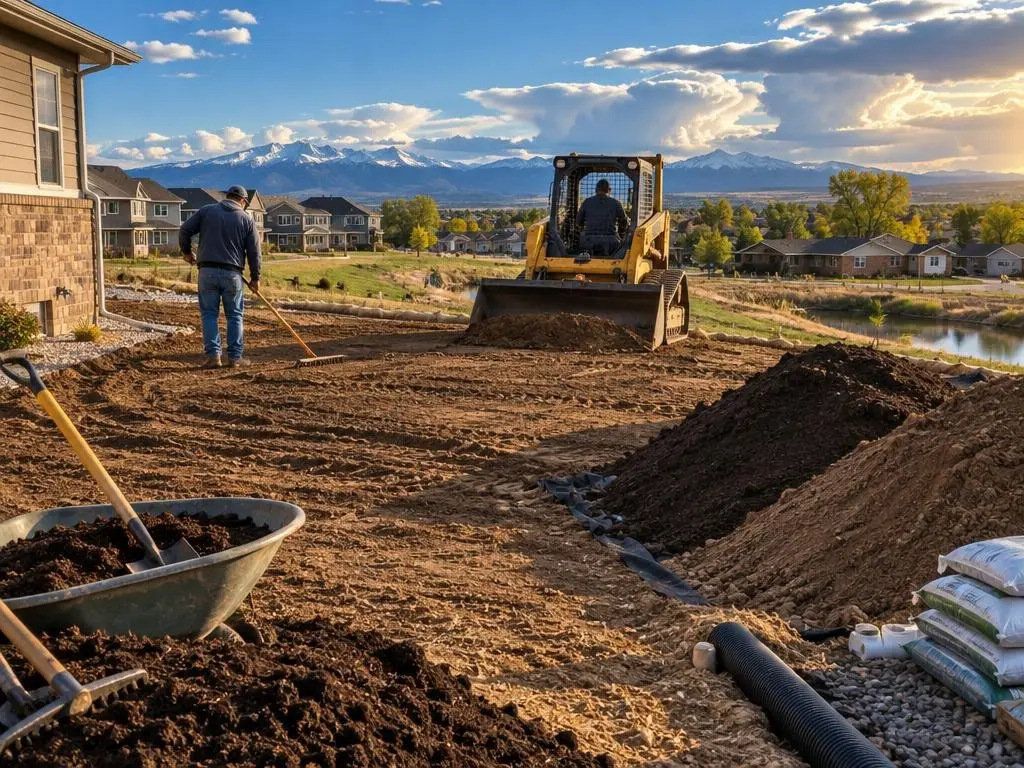
CSU Extension's guidance for seeding a lawn is to test the soil, control perennial weeds before you disturb the ground, loosen the top 12 inches, grade so water drains away from the foundation, and work organic matter into the top six to eight inches before smoothing and firming the surface. New construction lots along the Front Range often have compacted subsoil at the surface and little organic matter, and many sit on clay that swells when it gets wet. We rip or till, add compost or topsoil where it is needed, set the grade and rake out rocks and clods before the hydroseeder ever arrives.
Timing a Denver lawn
CSU recommends sowing bluegrass in late August to early September. The worst of the heat is over, nights are cooler, and the grass has the whole fall to root before winter. Seeding from May through July works, but July highs near 90 degrees and strong sun mean more watering and closer attention. Very late fall seedings run into early snow and cold nights and may not establish until spring.
Watering the first month
The mulch holds moisture, but in Denver's dry air it does not hold it for long. Plan on short sprinkler cycles at least twice daily through roughly the first two weeks, enough to keep the surface damp, then switch to fewer and deeper waterings as the grass fills in. CSU notes germination can take up to two weeks. HomeGuide says most hydroseed lawns are ready to mow after four to six weeks. We give you a written schedule on the day we spray.
Overseeding instead of starting over
If the lawn is thin but the grade is fine and the grass that is left is the type you want, overseeding may be enough. We aerate or slit the soil, spray seed into the existing turf, and topdress bare spots. If the lawn is mostly weeds, the grade holds water against the house, or the soil is compacted, a full renovation usually costs less in the long run than repeated patching.
What a New Lawn Includes
Every piece of the job is its own line on the estimate, so no cost hides inside another.
Site walk and soil check
We look at grade, drainage, sun, irrigation and soil, and suggest a soil test where it would help.
Weed control and debris removal
Existing weeds and old turf handled before tilling; rocks, roots and construction debris raked out.
Rough and fine grading
Grade set to drain away from the foundation, then smoothed and firmed for seeding.
Compost or topsoil
Organic matter or screened topsoil worked into the top several inches on poor or compacted lots.
Hydroseed application
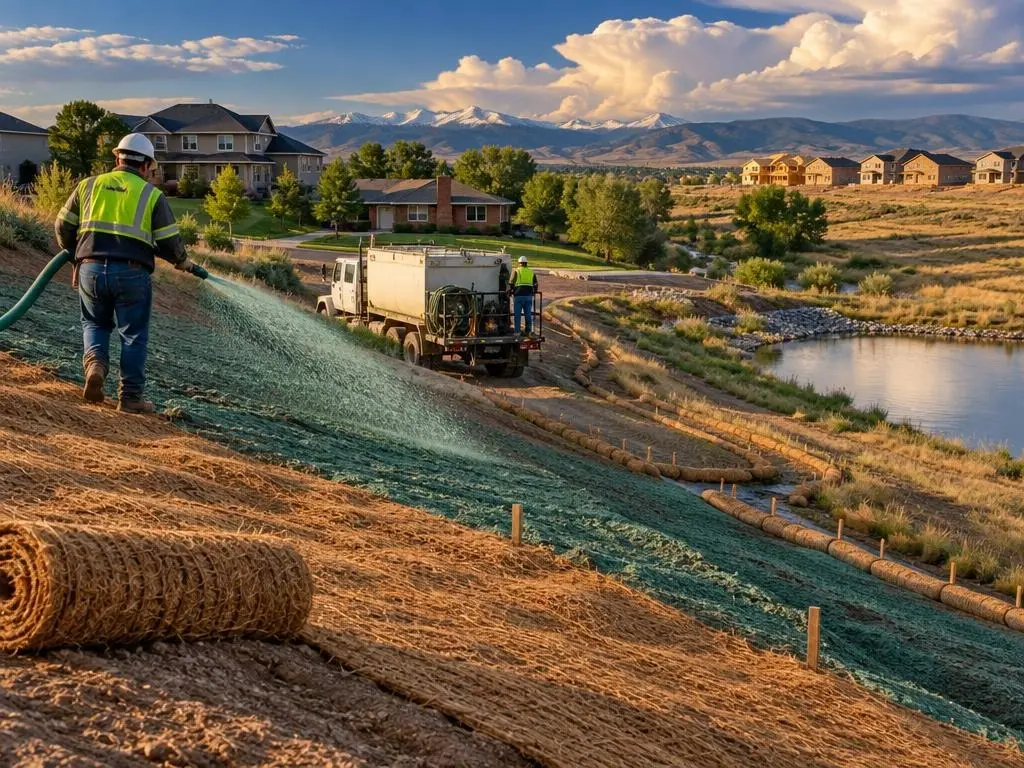
One pass of the hydroseeder lays down the seed together with tackifier, fiber mulch and a starter fertilizer.
Overseeding and patch repair
Thin lawns and dog spots reseeded into the existing turf where full renovation is not needed.
Hydroseeding Cost for a Home Lawn
| Item | Published range |
|---|---|
| Hydroseeding per square foot (HomeGuide) | $0.12 to $0.35 |
| 5,000 sq ft lawn (HomeGuide) | $1,000 to $1,750 |
| 8,000 sq ft lawn (HomeGuide) | $1,600 to $2,500 |
| Hydroseeding per square foot (Angi) | $0.07 to $0.26 |
| Minimum job fee (HomeGuide) | $300 to $500 or more |
| Sod installation, for comparison (HomeGuide) | $1 to $4 per sq ft |
| Overseeding per square foot (Lawn Love) | $0.07 to $0.23 |
Published national ranges, shown for planning only. Slope, access, soil prep and seed mix change every job, and the written estimate we give you after the site visit is the price.
How a New Lawn Goes In
1. Walk the yard
We measure, check drainage and irrigation, and talk through grass options.
2. Prep the soil
Weeds handled, soil loosened, compost or topsoil added and grade set.
3. Spray
The slurry goes on in an even layer, with the green mulch showing full coverage.
4. Water and wait
You follow the written watering plan; sprouts usually appear within about two weeks.
5. First mow
Usually four to six weeks out, once the grass is tall enough and the soil is firm.
Why Choose Us for Home Lawn Hydroseeding
Prep comes first
We will tell you if the lot needs grading or topsoil before seed, instead of spraying over a problem.
Honest timing
If a July seeding will cost you a lot of water, we say so and offer a late-summer date.
Written care plan
Watering and mowing instructions in writing, not just a quick talk at the curb.
Home Lawn Hydroseeding Questions
How much does hydroseeding cost for a Denver yard?
By HomeGuide's national figures, hydroseeding runs $0.12 to $0.35 for every square foot covered, or roughly $1,000 to $1,750 for a 5,000-square-foot lawn, with minimum job fees of $300 to $500 or more. Grading, topsoil and slope work add to that. We give you a written estimate after we see the yard.
How much does hydroseeding cost for 2 acres?
Large areas are usually priced by the acre. LawnStarter puts hydroseeding at $2,136 to $4,897 per acre and Fixr at $2,000 to $4,000 per acre, so two acres would be roughly double that before any grading or prep. Larger jobs sometimes come in lower per acre because setup is spread over more ground.
How many weeks should foot traffic stay off a new Denver hydroseed lawn?
Keep off it until after the first mowing, usually four to six weeks. Walking on it earlier pushes seedlings into the mud and leaves bare footprints.
Can I hydroseed bluegrass in the spring?
Yes. It takes more water because it has to establish going into summer heat. CSU Extension says late summer is easier for cool-season grasses like bluegrass.
What is in the green mulch?
Wood or paper fiber mulch, colored so the crew can see coverage. It holds moisture against the seed and fades as the grass grows.
Home Lawn Hydroseeding Service Areas
- Hydroseeding in Denver, CO
- Hydroseeding in Aurora, CO
- Hydroseeding in Lakewood, CO
- Hydroseeding in Arvada, CO
- Hydroseeding in Westminster, CO
- Hydroseeding in Thornton, CO
- Hydroseeding in Centennial, CO
- Hydroseeding in Highlands Ranch, CO
- Hydroseeding in Castle Rock, CO
- Hydroseeding in Parker, CO
- Hydroseeding in Littleton, CO
- Hydroseeding in Broomfield, CO
- Hydroseeding in Commerce City, CO
- Hydroseeding in Brighton, CO
- Hydroseeding in Northglenn, CO
- Hydroseeding in Golden, CO
- Hydroseeding in Wheat Ridge, CO
- Hydroseeding in Englewood, CO
- Hydroseeding in Lone Tree, CO
- Hydroseeding in Castle Pines, CO
- Hydroseeding in Erie, CO
- Hydroseeding in Superior, CO
- Hydroseeding in Louisville, CO
- Hydroseeding in Ken Caryl, CO
Get a Home Lawn Hydroseeding Estimate
Free lawn estimates anywhere in the Denver metro.